Zone Zero wildfire buffer rules expand across Rancho Bernardo and Poway, reshaping landscaping near homes
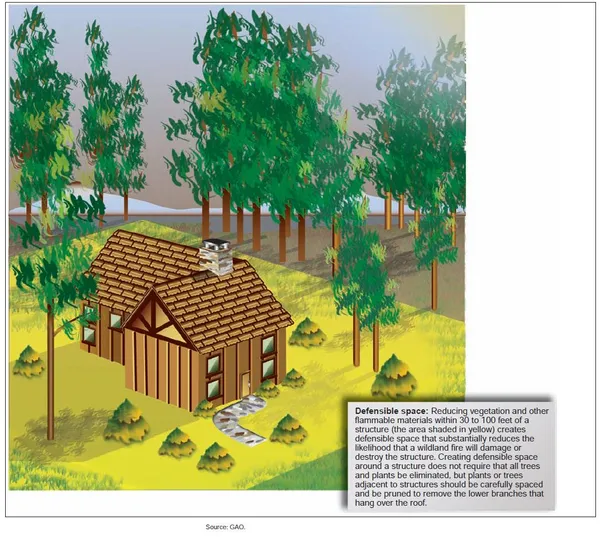
New five-foot “Zone Zero” requirements are taking hold in North County neighborhoods
New wildfire-prevention rules commonly referred to as “Zone Zero” are now affecting most residential parcels in Rancho Bernardo and the city of Poway, driven by how much of each community falls within mapped fire hazard severity zones. Zone Zero focuses on the area closest to buildings—within five feet of exterior walls and attached structures—where research has found that wind-driven embers can ignite common yard materials and spread fire to the home.
In practice, Zone Zero standards are designed to create an ember-resistant strip immediately around structures. Local fire codes used in parts of San Diego County define this “immediate zone” as extending five feet outward from exterior wall surfaces, patios, decks, and other attachments, and require it to be built with continuous hardscape or other non-combustible materials. Those codes also prohibit combustible ground covers such as mulch within the zone.
Why Rancho Bernardo and Poway are broadly impacted
The primary reason the rules reach so many properties is the extent of land designated as fire hazard severity zones. Poway’s wildfire-preparedness materials state that more than 90% of the city’s geography is within a state-designated fire hazard severity zone, a designation that carries legal fire-safety requirements and triggers additional building and defensible-space obligations depending on the severity level.
Rancho Bernardo, as a community on the inland edge of the city of San Diego and adjacent to open-space corridors, overlaps with areas mapped as very high fire hazard severity zones in the city’s official fire hazard severity zone mapping program. Those map designations shape which parcels must meet wildfire-related construction and vegetation-management requirements.
What property owners may need to change
Zone Zero rules are narrower in distance than traditional defensible space requirements, but more stringent in what is allowed closest to a structure. Local guidance commonly emphasizes eliminating or relocating combustible materials that can readily ignite from embers.
- Replacing combustible ground covers (including many mulches) near the structure with non-combustible alternatives such as gravel, pavers, or concrete.
- Clearing dead vegetation and accumulations of leaves or debris along walls, under decks, and around attachments.
- Addressing fencing and gates where combustible segments connect to or sit immediately adjacent to the home.
- Reducing combustible storage near walls, including firewood and some outdoor items.
Zone Zero is intended to limit the chance that small ember ignitions in landscaping or yard materials can escalate into a structure fire.
Enforcement timeline remains uneven statewide
California adopted legislation creating the framework for an ember-resistant zone, but statewide vegetation-clearance requirements have faced delays while rulemaking continues. At the same time, San Diego County and some local jurisdictions have already incorporated Zone Zero concepts into fire codes and public guidance, creating an earlier compliance reality in communities where hazard-zone mapping brings large numbers of parcels under wildfire standards.
For homeowners in Rancho Bernardo and Poway, the practical effect is a growing expectation that the first five feet around the home will be treated less like a traditional landscaped bed and more like a fire-safety feature integrated into the property’s overall defensible-space plan.