Trump proposal would place ICE agents in airport security roles, raising operational and legal questions nationwide
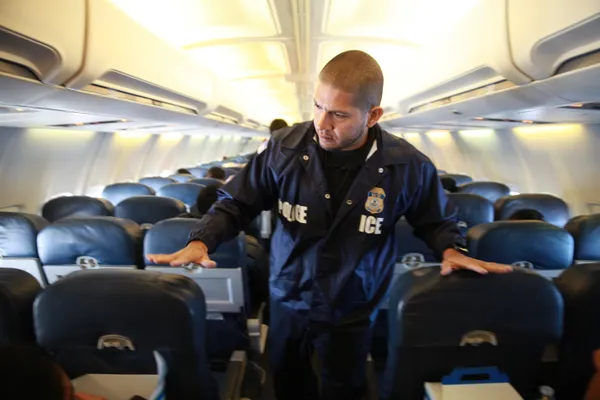
A shutdown-driven plan with immediate implications for travelers
A federal proposal aired by President Donald Trump would shift some airport security duties to agents from U.S. Immigration and Customs Enforcement (ICE), a move framed as a response to growing screening delays during a partial Department of Homeland Security (DHS) shutdown. The plan has been described as a near-term deployment of ICE personnel to airports if the funding standoff persists, coinciding with reports of extended checkpoint lines at several large U.S. hubs.
San Diego International Airport (SAN), one of the country’s busiest single-runway commercial airports, operates within a layered security environment that already involves multiple federal entities. Any new operational role for ICE at terminals would intersect with existing responsibilities assigned by federal law and long-standing airport security programs.
How airport screening is structured now
Passenger and carry-on screening at U.S. commercial airports is primarily a Transportation Security Administration (TSA) function. TSA sets screening requirements and staffs checkpoints at most airports, while airport operators maintain security programs and coordinate with local law enforcement and federal agencies on incident response and perimeter protection.
At SAN, federal inspection functions related to international arrivals are handled by U.S. Customs and Border Protection (CBP), while TSA oversees checkpoint screening for departing passengers. ICE’s traditional mission centers on immigration enforcement and investigations, rather than routine checkpoint screening operations.
What the proposal could mean in practice
The proposal has not been accompanied by a publicly released operational directive specifying tasks, training standards, or command structure. That leaves open several implementation questions, including whether ICE agents would:
- perform crowd-management and queue control in public terminal areas;
- support law enforcement presence near screening locations;
- conduct immigration-related enforcement activities in airport spaces; or
- attempt to backfill screening functions normally performed by trained TSA screeners.
Federal law provides mechanisms for deploying federal law enforcement personnel at airports to address aviation security concerns, typically through interagency agreements. However, standard checkpoint screening is a specialized function built around TSA procedures, credentialing, and aviation-security protocols.
Operational tradeoffs and civil-liberties considerations
Any visible expansion of immigration enforcement into passenger-processing areas could reshape traveler expectations at domestic terminals, particularly if enforcement actions occur in proximity to checkpoints. Airports are complex public spaces where federal, local, and private stakeholders share responsibilities; changes to one part of the system can affect throughput, staffing allocations, and passenger experience.
Key unresolved issues include the scope of ICE authority at terminals, how any new role would be coordinated with TSA and airport police, and whether the change is intended to address staffing shortfalls, enforcement priorities, or both.
What to watch for in San Diego
For SAN travelers, the practical impact will depend on whether federal agencies issue airport-specific guidance, how staffing is allocated at checkpoints, and whether any new ICE presence is limited to support functions or expands into routine passenger processing. Airport operations can also shift quickly during federal funding disruptions, particularly during peak travel periods.
Absent detailed implementation guidance, the proposal remains a significant policy signal with uncertain day-to-day consequences for airports, including San Diego International, and for the division of responsibilities among DHS components.