San Diego Veterans For Peace Install Billboard Urging Troops to Disobey Illegal Orders, Citing Military Law Standards
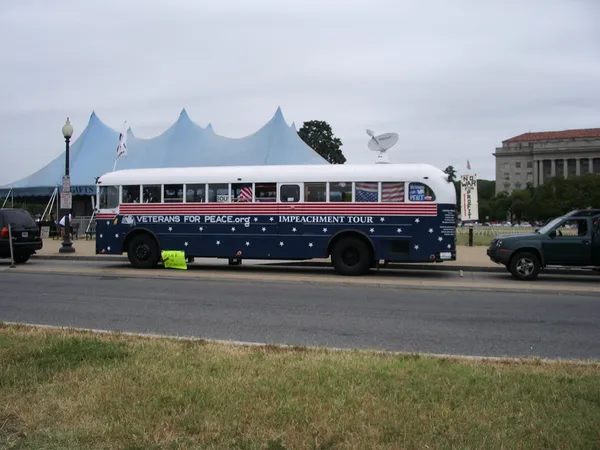
A new public message aimed at service members
A Veterans For Peace effort to place billboards near U.S. military installations has reached San Diego, with local organizers installing a large sign carrying the message that troops have a “duty to disobey illegal orders.” The campaign is part of a broader national push by the organization to communicate directly with active-duty personnel, reservists and National Guard members through prominent public displays.
The billboard’s central claim reflects a long-standing principle in U.S. military justice: service members are obligated to follow lawful orders, but are not protected when carrying out orders that are clearly unlawful. In practice, the standard commonly discussed in military legal guidance centers on “patently” or “manifestly” illegal orders—those that a reasonable person would recognize as criminal, such as directives to commit war crimes or other obvious violations of law.
What the law requires — and what remains difficult in real time
Military discipline depends on obedience to the chain of command, and orders are generally presumed lawful when issued by proper authority and related to military duty. That presumption is one reason legal experts emphasize that determining illegality can be challenging in fast-moving situations, particularly when legality turns on classified facts, rules of engagement, or complex questions of jurisdiction and international law.
The legal risk runs in both directions: carrying out an illegal order can expose a service member to criminal liability, while refusing a lawful order can lead to punishment under the Uniform Code of Military Justice. This tension is a central feature of the debate triggered by the billboard campaign.
Support and criticism from veterans and legal observers
Veterans For Peace frames the billboards as educational and preventative, arguing they reinforce the oath to uphold the Constitution and comply with the law. The group has also promoted resource referrals intended to help service members evaluate and respond to orders they believe are unlawful.
Critics, including some veterans and military-law commentators, have argued that simplified slogans can blur the difference between unlawful orders and controversial but lawful missions. They warn that public messaging may encourage service members to make legal determinations without adequate advice, potentially undermining good order and discipline.
Why San Diego is a focal point
San Diego’s extensive military presence—spanning Navy, Marine Corps and joint operations—makes the region a strategic location for messages directed at uniformed personnel. The billboard arrives amid broader national arguments over politicization of the armed forces and the boundaries of lawful military and domestic deployments.
- Core claim: service members must refuse orders that are clearly illegal.
- Key constraint: most orders are presumed lawful, and illegality is often complex to assess.
- Central controversy: whether billboard messaging educates troops or oversimplifies legal standards.
The dispute centers less on whether patently illegal orders must be refused, and more on how service members can reliably recognize them under real-world pressure.
Local and national reaction is expected to track the wider debate: how to reinforce lawful conduct in uniform while maintaining command authority, clarity in training, and credible avenues for service members to seek guidance when legality is in doubt.