San Diego County begins the week warm and dry, then turns cooler with rain chances late week
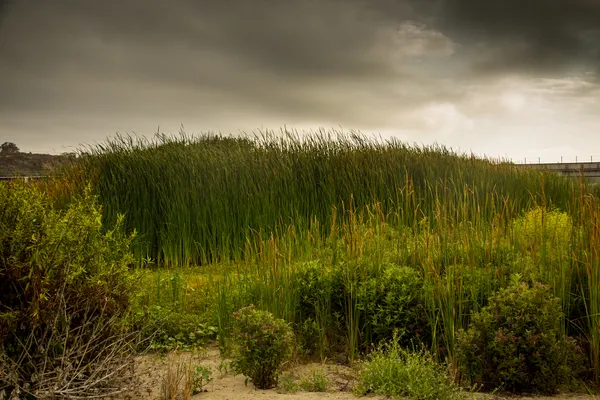
Warm start, then a shift toward cooler and cloudier conditions
San Diego County is entering a week marked by a notable temperature swing: several days of above-average warmth early, followed by a midweek transition toward cooler conditions and an increasing chance of rain later in the week. The pattern is being driven by a broad area of high pressure that has favored warm, dry air and offshore breezes, then is expected to weaken as a low-pressure system edges closer to Southern California.
Through Tuesday, daytime highs are expected to run roughly 5 to 15 degrees above seasonal averages across much of the county under mostly clear skies. Offshore flow has also supported periodic Santa Ana conditions, particularly along coastal mountain slopes, foothills and adjacent valleys, with locally gusty winds and very dry air in inland areas.
Santa Ana winds and dry air remain a factor early
Winds have been strongest in wind-prone mountain and foothill corridors, and the dry air has lowered humidity levels inland. Despite the dryness, recent rainfall earlier this month has kept vegetation moisture higher than it typically is during prolonged dry spells, reducing the likelihood of critically dry fuels even as elevated fire-weather conditions can develop when gusts and low humidity overlap.
- Early week: warm afternoons, clear skies, and occasional offshore winds.
- Near the coast: patchy fog is possible during late-night and morning hours where the marine layer briefly redevelops.
Cooling trend begins midweek as marine layer expands
By Wednesday, forecast models indicate a turn toward stronger onshore flow as a low-pressure feature approaches the region. That shift is expected to deepen the marine layer, expanding cloud cover during nighttime and morning hours from the coast into parts of the western valleys. Daytime temperatures are projected to step down from early-week levels, with the most noticeable cooling inland where the early warmth has been most pronounced.
The week’s transition is expected to replace clear, warm afternoons with a more typical marine influence: cooler days, more morning clouds, and increasing late-week precipitation potential.
Late-week rain chances: still uncertain, but on the table
Rain prospects are highest late in the week, but confidence in timing and coverage remains limited because the storm track is still uncertain. Current guidance supports at least a chance of light precipitation as the low-pressure system nears, with the likelihood generally higher along the coast and west-facing slopes if moisture and lift align. Regardless of whether measurable rainfall materializes, the broader trend points to cooler, cloudier conditions to close out the workweek compared with the warm start.
Residents should also anticipate large temperature differences between daytime highs and overnight lows, especially away from the immediate coast, where clearer skies and drier air early in the week can allow for sharper nighttime cooling.