San Diego County approves $8.75 million package for health studies, air filtration, and Tijuana River fixes
Unanimous vote targets near-term mitigation while larger binational infrastructure projects continue
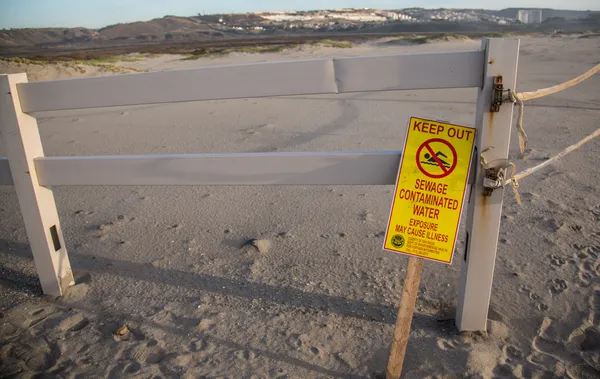
San Diego County supervisors unanimously approved an $8.75 million package on January 28, 2026, allocating county reserve funds to expand local public-health monitoring and reduce residents’ exposure to pollution linked to transboundary flows in the Tijuana River Valley. The action comes amid years of persistent sewage contamination that has affected South Bay neighborhoods through water impacts and airborne odors associated with the crisis.
The approved funding combines three main efforts: expanded air filtration support for households, epidemiological research on health effects tied to exposure, and a temporary infrastructure intervention near Saturn Boulevard intended to limit the concentration of pollution and associated airborne impacts. County leaders also agreed to establish a new executive-level position, a “Pollution Crisis Chief,” tasked with coordinating the county’s response across emergency management, infrastructure mitigation, environmental protection, public-health monitoring, and intergovernmental advocacy.
How the $8.75 million is structured
The package includes $4 million for an air purifier distribution effort administered through the San Diego County Air Pollution Control District, which has provided air purifiers and replacement filters to households in South Bay communities affected by hydrogen sulfide emissions associated with wastewater flows near the river valley. In addition to the air program expansion, $4.75 million is directed to two components: health studies and a short-term infrastructure fix intended to reduce localized impacts connected to pollution flows in the valley.
- $4.00 million: expansion of the household air purifier distribution and filter support program in impacted South Bay communities.
- $4.75 million: combined funding for epidemiological health studies and a temporary infrastructure project near Saturn Boulevard.
- Administrative action: creation of an executive “Pollution Crisis Chief” role; recruitment has begun.
What the county can and cannot control
The county’s new spending is designed as a local response to a problem driven largely by cross-border wastewater infrastructure limitations and episodic system failures, with significant responsibility resting at the federal and binational level. Unlike treatment plant capacity expansions and cross-border diversion projects—generally led by federal agencies—county initiatives focus on exposure reduction, monitoring, and targeted mitigation projects on the U.S. side of the border.
Recent federal actions have centered on expanding the South Bay International Wastewater Treatment Plant’s capacity by 10 million gallons per day, a milestone completed in 2025, as part of a broader effort to increase treatment capacity and reduce untreated flows reaching the river and coastline during certain conditions. Separately, U.S. and Mexican officials signed a memorandum of understanding in mid-2025 establishing a timeline of projects through 2027 aimed at reducing transboundary pollution through infrastructure upgrades and operational changes on both sides of the border.
Why health studies are central to the new vote
County officials framed the research funding as necessary to document and track chronic health outcomes potentially linked to recurring exposure to airborne and environmental contaminants near the river valley. While residents and public agencies have long documented odors and quality-of-life impacts, the new studies are intended to provide more systematic data that can inform future public-health decisions and intergovernmental requests for resources.
The board’s action pairs immediate exposure-reduction measures with longer-term data collection intended to guide future policy and funding decisions.
The county’s new coordination post is designed to consolidate accountability and ensure the separate components—public health, emergency response, and mitigation projects—move forward in parallel while broader infrastructure projects proceed through federal and binational channels.