Rafael Payare spotlights Shostakovich and Mahler as San Diego Symphony shapes a distinctive orchestral identity
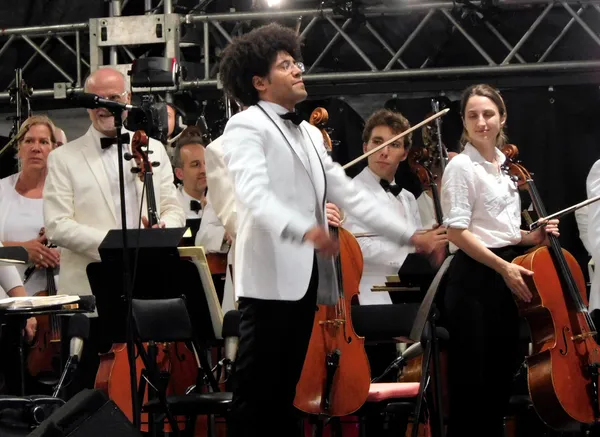
Two major symphonies anchor a winter focus on big orchestral repertoire
The San Diego Symphony’s winter programming places two 20th-century landmarks at the center of a broader effort to define an identifiable orchestral profile under Music and Artistic Director Rafael Payare. In late January and early February, Payare leads consecutive performances that pair Beethoven’s Symphony No. 1 with Dmitri Shostakovich’s Symphony No. 8, followed by Gustav Mahler’s Symphony No. 7 presented as a single-work program.
The Shostakovich Eighth concerts are scheduled for Jan. 24, 2026 (7:30 p.m.) and Jan. 25, 2026 (2 p.m.) at the Jacobs Music Center. Mahler’s Seventh follows on Jan. 31, 2026 (7:30 p.m.) and Feb. 1, 2026 (2 p.m.), also at Jacobs Music Center. Both programs feature Payare conducting the San Diego Symphony Orchestra.
How Shostakovich and Mahler fit into a multi-season strategy
These performances align with an ongoing, multi-season project in which Payare and the orchestra have been presenting symphonies by both Shostakovich and Mahler as part of an extended cycle. The approach underscores continuity rather than one-off programming: the two composers recur as reference points for the ensemble’s sound, technical demands, and long-range repertoire planning.
In November 2025, Payare’s contract was extended through the 2028–29 season, accompanied by a new title, Music and Artistic Director. The expanded mandate formalizes a role that blends musical leadership with broader artistic planning, at a moment when the orchestra is emphasizing large-format symphonic works that test ensemble precision and interpretive cohesion.
Why these works matter: scale, contrast, and orchestral color
Shostakovich Symphony No. 8 was composed during World War II and is widely regarded as one of the composer’s most expansive and emotionally complex symphonic statements. Program framing for the San Diego performances highlights its movement through tragedy, satire, conflict and a closing vision of beauty.
Mahler Symphony No. 7 is presented as an “epic” five-movement structure moving from nocturnal atmosphere toward a concluding, celebratory finale. The decision to program it alone reflects both its scale and the orchestra’s interest in immersive, single-focus symphonic experiences.
Venue and audience context
Both programs take place at the Jacobs Music Center, the orchestra’s primary indoor home. For the Mahler Seventh weekend, the organization has scheduled pre-concert talks one hour before performances, offering repertoire context as part of the event format.
Across consecutive weekends, the programming juxtaposes Beethoven’s early-Classical symphonic model with two 20th-century works that demand large-scale orchestral color, stamina, and ensemble control.
Together, the Shostakovich and Mahler concerts represent a concentrated snapshot of how Payare’s tenure is being expressed in public-facing repertoire choices: recurring composer cycles, high-demand symphonic works, and programming designed to build continuity in how audiences recognize the orchestra’s artistic direction.