Mexican fruit fly detections trigger 77-square-mile quarantine centered near La Mesa, with treatments through September 2026
Quarantine area drawn after five flies detected
A portion of San Diego County has been placed under quarantine after five adult Mexican fruit flies were detected in and around the City of La Mesa between Feb. 5 and Feb. 26, 2026, including a mated female. Agricultural officials determined the detections meet the threshold for an active infestation and initiated an emergency response designed to prevent the pest from establishing and spreading.
The quarantine covers roughly 77 square miles. The regulated area is bounded to the north by the San Diego River, to the south by Sweetwater Reservoir, to the west by Interstate 15, and to the east by El Cajon. The program involves coordination among state, federal and county agricultural agencies.
Why the Mexican fruit fly matters for San Diego and statewide agriculture
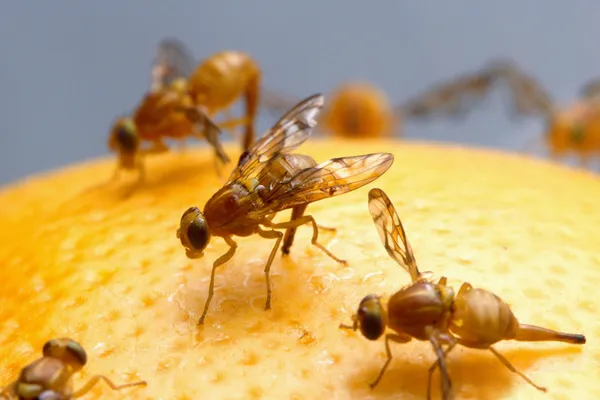
The Mexican fruit fly (Anastrepha ludens) is a serious pest of many fruit and vegetable crops. Damage occurs when females lay eggs in fruit; the larvae feed inside, making produce unfit for consumption. The species is associated with tropical and subtropical regions of Mexico and Central America, and in the United States its distribution has historically been limited, with eradication efforts used when detections occur elsewhere.
California’s emergency findings identify a broad list of potentially affected crops, including apple, avocado, grapefruit, Meyer lemon, mandarin, nectarine, orange, peach, pear, persimmon, pomegranate and tangerine. Officials also cite potential impacts beyond commercial production, including risks to backyard fruit trees and certain native plants that can serve as hosts.
What residents in the quarantine zone can expect
The response plan uses an integrated approach combining intensive surveying, sterile insect releases, targeted bait treatments and, when warranted, removal of host fruit from specific properties.
Delimitation trapping: Additional traps are deployed over an approximately 81-square-mile survey area around detection sites to determine the extent of the infestation and guide response boundaries.
Sterile insect technique: Sterile male Mexican fruit flies are scheduled for release, at a rate of about 250,000 males per square mile per week, within up to 50 square miles around the infestation. The strategy reduces reproduction by pairing sterile males with wild females, resulting in no viable offspring.
Targeted treatment: Properties within 200 meters of detections are slated for foliar bait treatments using a spinosad-based formulation described as originating from naturally occurring bacteria.
Fruit removal: Host fruit removal is planned within 100 meters of properties where larval evidence is found and/or where a mated female has been detected.
The emergency program is scheduled to remain in effect through Sept. 25, 2026, the time projected to cover three fruit fly life cycles under the state’s treatment protocol.
How long the response may last
Program timelines are based on temperature-driven models that estimate how quickly the insect develops, with warmer conditions accelerating life cycles and cooler conditions slowing them. Officials say the Sept. 25, 2026 end date reflects the projected completion of the third life cycle associated with the late-February detections, a benchmark used to support eradication and verify that additional generations are not developing in the area.